
The Short Answer
How long does Invisalign take? Most Invisalign cases take 12 to 18 months from start to finish. Simple cases with mild crowding or spacing can wrap up in about 6 months, while more involved bite corrections may run 24 months or longer. Your actual timeline depends on two big factors: how complex your smile is, and how consistently you wear your aligners.
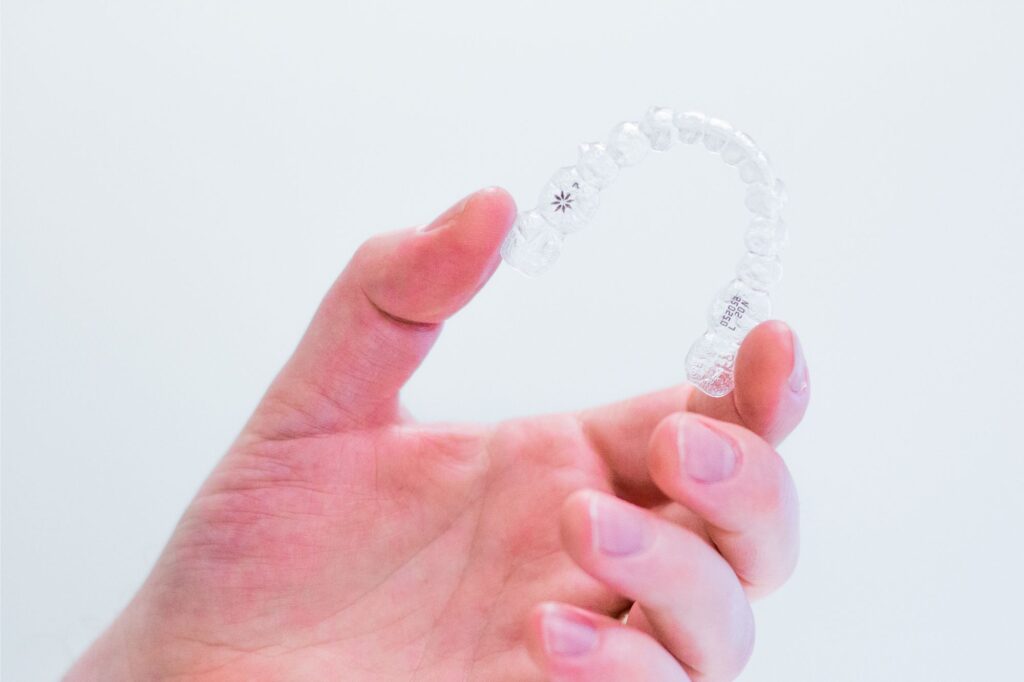
At Hansen Miller Orthodontics, our board-certified orthodontists use Invisalign as a clear aligner system that moves your teeth in small, planned stages. Each set of aligners nudges specific teeth into a slightly new position. You swap them out on a schedule, and over time, everything shifts into place.
Here’s the honest truth. Marketing often promises fast, dramatic changes in just a few months. Real teeth move at a biological pace, and pushing too fast isn’t safe or stable. A realistic timeline gives you a smile that stays put long after the aligners come off.
Your first free consult includes digital scans and a detailed look at your bite. From there, our team maps out a personalized smile plan with an estimated end date you can actually plan around. Families across the greater Las Vegas area rely on that clarity to schedule life around treatment.

How Invisalign Works: A Phased, Month-by-Month Process
Invisalign works through a phased plan that moves teeth in scheduled stages, not guesswork. Every aligner in your series is mapped in advance from 3D digital scans, so you can preview the projected smile before you get started. Below is what the process looks like month by month, from your first free consult all the way through your retainer phase.
Month 0: Consultation and Digital Planning
Your smile plan starts with a free consult at Hansen Miller Orthodontics. Our team takes digital scans of your teeth, reviews your bite, and answers your questions. Using those scans, your orthodontist builds a custom smile plan that shows how your teeth will move at each stage.
Month 1: Getting Started
You’ll receive your first set of aligners along with clear instructions. Most people wear each tray for 1 to 2 weeks before switching to the next. Wear time matters here: aligners need to stay in for 20 to 22 hours a day, coming out only for meals, drinks (other than water), and brushing.
Months 2 to 3: Early Movement
This is when you start seeing real change. Front teeth often shift first because they’re smaller and easier to move. Small tooth-colored attachments may be added to help certain teeth rotate or tip in the right direction. Progress photos at check-ins will show visible movement compared to day one.
Months 4 to 5: Mid-Treatment Adjustments
By now, your orthodontist will check that your teeth are tracking with the plan. If a tooth is moving slower than expected, small refinements can be made. You’ll still visit our office every 6 to 8 weeks, which is less often than metal braces require.
Months 6 to 18: Final Alignment and Refinements
The last stretch focuses on fine-tuning. Bite corrections, small rotations, and finishing details all happen here. Many people need a short set of “refinement” aligners at the end to perfect the smile before their retainer phase begins.
Why an Accurate Invisalign Timeline Matters
An accurate Invisalign timeline helps you plan around life. Knowing your real end date lets you prepare for the moments that matter and understand your role in staying on track. Weddings, graduations, big work events, family photos: all of these are easier to schedule when you have a projected end date. With Invisalign, the digital plan built during your consult gives you a clear estimate before you commit.
Invisalign also fits into busy schedules better than you might expect. Check-in visits happen every 6 to 8 weeks, compared to every 4 to 6 weeks with fixed braces. Fewer visits means less time away from work or school, something our Las Vegas families genuinely appreciate.
Compliance is the biggest lever you control. Wearing your aligners the full 22 hours each day keeps you on schedule. Slacking off, even by a few hours daily, can add weeks or months to your total time. Removable aligners give you flexibility for meals and special occasions, but they only work when they’re in your mouth.
An accurate timeline also builds trust. You know what to expect, when to expect it, and what your part is. No surprises.
Invisalign vs. Braces: Which Takes Longer?
Both options work, but they follow different timelines and involve different trade-offs. Here’s a side-by-side look that keeps things neutral so you can weigh the facts.
| Feature | Invisalign | Braces |
|---|---|---|
| Typical treatment time | 12 to 18 months | 18 to 24 months |
| Best for | Mild to moderate cases | Moderate to complex cases |
| Visit frequency | Every 6 to 8 weeks | Every 4 to 6 weeks |
| Compliance factor | High (removable) | Low (fixed in place) |
| Visibility | Nearly invisible | Visible (metal) or subtle (clear) |
| Food restrictions | None | Yes, sticky and hard foods |
For mild to moderate crowding or spacing, Invisalign is often the faster route. The clear aligners apply steady, gentle pressure and can be paired with attachments for trickier movements.
For complex bite issues, severe rotations, or larger jaw discrepancies, braces sometimes finish the job more efficiently. Because braces are fixed to your teeth, they work around the clock without needing your input. Some of our braces use self-ligating braces technology, which relies on built-in clips rather than elastics to hold the wire.
Compliance changes everything with Invisalign. If you’re the type who might forget to put aligners back in after lunch, braces may be a better match. If you’re motivated and love the idea of a nearly invisible option, Invisalign is a strong choice.
Our board-certified orthodontists will walk you through both options at your free consult so you can pick what fits your smile and your life.
Factors That Affect Your Invisalign Timeline
Several things can speed up or slow down your Invisalign treatment. Understanding them helps you get the most out of every aligner tray.
- Case complexity. Mild crowding or small gaps move quickly. Deeper bite issues, severe rotations, or big spacing problems take longer because more tooth movement is needed at each stage.
- Aligner wear time. This is the single biggest factor you control. Wearing your aligners 20 to 22 hours a day keeps teeth moving on schedule. Dropping to 15 or 16 hours stretches out your timeline and can throw off the entire plan.
- Age and bone density. Teens often see faster movement because their jaws are still growing and bone is more responsive. Adults can absolutely get great results with Invisalign; movement just tends to be a bit steadier.
- Attachments and refinements. Small tooth-colored bumps called attachments help aligners grip teeth for tricky movements. Adding refinements at the end (a fresh set of aligners to perfect the finish) can add a few weeks, but the payoff is a better smile.
- Missed or delayed aligner changes. Switching to the next tray too early can cause discomfort and tracking issues. Switching too late slows progress. Sticking to the schedule your orthodontist sets keeps things on pace.
- Overall oral health. Cavities, gum issues, or other concerns may need to be addressed before or during treatment, which can shift the timeline.
Your Invisalign timeline is a partnership. Our orthodontists build the plan; you power it forward every time you pop those aligners back in.
Who Is a Good Candidate for a Faster Invisalign Timeline?
Some smiles are built for a quicker Invisalign timeline. If your case is on the milder side and you’re ready to commit to wear time, you could be looking at the shorter end of the range.
You may be a great fit for faster treatment if you have:
- Mild to moderate crowding
- Small gaps or spacing between teeth
- Minor bite issues that don’t involve major jaw correction
- Healthy teeth and gums
- The discipline to wear aligners 20 to 22 hours daily
Teens and adults are both eligible for Invisalign. Younger patients often benefit from Invisalign Teen, which includes indicators to track wear time. Adults appreciate the discreet look, especially for work and social settings.
If your case involves severe rotations, significant bite discrepancies, or complex jaw alignment, our orthodontists may recommend braces or a combination approach for the best result. That’s not a downgrade; it’s just the right tool for your smile.
The only way to know your personalized timeline is a free consult. Our board-certified orthodontists at Hansen Miller Orthodontics will review your digital scans in person. They’ll walk you through the findings and give you an honest estimate you can actually plan around.
Frequently Asked Questions About Invisalign Timelines
How long does Invisalign take on average?
Most cases take 12 to 18 months. Mild cases can finish in as little as 6 months, and more complex smiles may take 24 months or more. Your exact timeline is set during your consult based on your digital scans and treatment goals.
Can Invisalign really work in 6 months?
Yes, for minor cases. If you have very mild crowding or small gaps, a short-run Invisalign plan may get you to the finish line in about 6 months. Our orthodontists will let you know honestly whether your smile fits this category during your free consult.
What happens if I don’t wear my aligners enough?
Treatment slows down and teeth may not track properly with your current tray. If you consistently wear aligners less than 20 hours a day, your orthodontist may need to add more aligners or extend your timeline. In some cases, refinement scans are needed to get things back on track.
How often do I change aligners?
Most people change aligners every 1 to 2 weeks, depending on their plan. Your orthodontist sets the exact schedule based on how your teeth respond. You’ll get a set of aligners at each check-in so you have what you need between visits.
Do I need to wear a retainer after Invisalign?
Yes, and this part is important. Teeth naturally want to shift back to their old positions after treatment. Wearing a retainer, usually at night indefinitely, keeps your new smile in place for the long haul. Retainers are how you protect all that hard work.
Is Invisalign faster than braces?
Often, yes, for mild to moderate cases. Invisalign averages 12 to 18 months, while braces typically run 18 to 24 months. For complex cases, braces can sometimes finish more efficiently because they work full-time without depending on wear compliance.
Curious about your own Invisalign timeline? Our board-certified orthodontists welcome you and your family for a free consult, where we’ll review your digital scans and share an honest estimate. At Hansen Miller Orthodontics, you’re more than just a patient—you’re part of our family, and we’ll build a smile plan that fits your life.
Learn more about your free consult and get a personalized timeline built around your smile.