Orthodontics may help support healthier breathing in some sleep-disordered breathing cases by evaluating jaw growth, bite alignment, palate width, and airway-related structure. If you or your kiddo struggles to get a good night’s sleep, the answer might involve more than just a new pillow. Sleep apnea affects many people, and some families do not realize that the shape of the jaw, palate, and mouth can play a role in nighttime breathing. Orthodontic care does not replace a sleep physician, but it can help identify structural concerns that may contribute to airway restriction and support a broader treatment plan.
At Hansen Miller Orthodontics, our team helps families understand how jaw development, bite alignment, and orthodontic treatment may connect to breathing concerns. For families comparing local care options, our Las Vegas Orthodontist page explains how specialist orthodontic care supports children, teens, and adults across Las Vegas and Henderson.

What Is Sleep Apnea and How Does It Connect to Orthodontics?
Sleep apnea is a disorder where breathing repeatedly stops and starts throughout the night. The most common type, obstructive sleep apnea, happens when the airway becomes blocked or narrowed during sleep. Your jaw structure, the shape of your palate, and where your tongue sits can all influence how much space exists for air to flow.
That’s where orthodontics can become part of the conversation. Orthodontists evaluate the bones and structures that affect your bite, jaw position, palate, and facial development. A narrow upper jaw, a recessed lower jaw, or crowded teeth may contribute to breathing trouble during sleep. The connection between orthodontics and sleep-disordered breathing is important, especially for children whose jaws are still developing.
Common signs of sleep apnea include loud snoring, gasping for air at night, waking up with headaches, and feeling exhausted during the day. Kids might show different symptoms like trouble focusing in school, hyperactivity, mouth breathing, or restless sleep. If any of these sound familiar, it is worth speaking with a physician or sleep specialist while also considering whether an orthodontic evaluation could help identify structural factors.
Sleep-disordered breathing is more common than many families think, and some cases go undiagnosed for years. The earlier you spot the signs, the more options you may have for coordinated care.
How Does Orthodontic Treatment Support Airway and Breathing?
Orthodontic treatment can help guide or improve the structures that support healthy breathing, especially in growing children. Unlike devices used only at night, orthodontic care may address jaw development, bite alignment, and palate width when those factors contribute to airway concerns.
Palatal expanders may be recommended for kids with narrow upper jaws. By gradually widening the palate, expanders can create more room in the upper arch and may support nasal airflow as part of a broader airway-focused plan.
Jaw and bite alignment matter when the lower jaw sits too far back or when bite issues affect tongue position. Correcting certain bite patterns may help improve how the jaw, tongue, and airway relate to one another.
Early intervention matters for growing kids. When orthodontists guide facial development during childhood, they can sometimes influence how the jaw bones grow and create better long-term alignment. The American Association of Orthodontists recommends kids see an orthodontist by age seven, which gives families the chance to catch growth, crowding, bite, and airway-related concerns early. You can learn more about treatment timing on our Orthodontics for All Ages page.
Braces in Las Vegas and Invisalign in Las Vegas can also play a role when bite issues contribute to restricted jaw function or poor tongue posture. Correcting an overbite, crossbite, crowding, or spacing issue may support better oral function and alignment.
Treatment rarely happens in isolation. Sleep apnea should be diagnosed by a physician or sleep specialist. Our team can coordinate with medical providers, dentists, ENTs, and sleep physicians when airway concerns overlap with orthodontic needs. With our orthodontic team at Hansen Miller Orthodontics, we look at the whole picture, not just the teeth.

Benefits of Orthodontic Care for Sleep-Disordered Breathing
Addressing airway-related concerns through orthodontics may offer benefits beyond a straighter smile. The right approach can support oral function, jaw development, sleep quality, and overall comfort when structural concerns are part of the issue.
How Does Treatment Improve Sleep Quality?
Better sleep starts with better breathing. When the airway has more room and the jaw is better supported, the body may not have to work as hard for air during sleep. Some families report improvements in rest, focus, mood, and energy when sleep-disordered breathing is properly evaluated and treated through coordinated care.
What Are the Long-Term Health Benefits?
For kids, healthy facial development can support long-term breathing patterns, bite function, and oral health. For adults, orthodontic care may help improve bite alignment and jaw function, which can support a broader sleep apnea treatment plan when paired with medical guidance.
Here’s a quick look at the key benefits:
- Improved nighttime breathing support when airway structure is part of the concern
- Better sleep quality, which may support improved focus, mood, and energy
- Healthier facial development in kids when jaw growth is guided at the right time
- Improved bite function and oral health as alignment improves
- Support for coordinated care between orthodontists, sleep physicians, ENTs, and dentists
For kids especially, addressing airway concerns early may help reduce years of poor sleep and the behavioral or academic challenges that can come with it. Parents often notice when their child sleeps better, breathes more comfortably, or functions better during the day.
Adults can benefit too, but the approach is different. Since adult jaws are no longer growing, treatment focuses on improving alignment, bite function, and available options within the existing structure. Some adults may still need CPAP, oral appliances, or other medical sleep apnea care, which is why coordination with a sleep physician is important.
Orthodontics vs. CPAP and Other Sleep Apnea Treatments
Understanding your options helps you make the best decision for your family. Here’s how different approaches compare:
| Treatment | Best For | How It Works | Considerations |
|---|---|---|---|
| CPAP | Often recommended for moderate to severe OSA | Delivers continuous air pressure through a mask | Requires nightly use; some find it uncomfortable |
| Oral Appliances | Some mild to moderate OSA cases | Repositions jaw during sleep | Usually coordinated through a dentist and sleep physician |
| Orthodontic Treatment | Structural concerns such as narrow palate, crowding, or bite issues | Supports jaw growth, bite alignment, and oral structure | May take months to years and should be coordinated with medical care |
| Lifestyle Changes | Some mild symptoms or physician-guided support | Weight management, sleep position changes, and other medical guidance | Complements but does not always replace medical treatment |
CPAP remains a common treatment for moderate to severe sleep apnea and works well when used consistently. The challenge is that some people struggle with nightly use because of discomfort.
Orthodontic treatment takes a different angle. Instead of only managing symptoms at night, it may support structural improvements when jaw growth, palate width, or bite alignment contributes to airway restriction.
The best results often come from combining approaches. Your sleep physician and orthodontist can work together to create a plan that addresses both immediate symptoms and long-term structure.
What Affects the Cost of Airway-Focused Orthodontic Treatment
Several factors influence what you’ll invest in orthodontic care for sleep-related concerns:
- Type of appliance: Palatal expanders, braces, Invisalign, and oral appliances can each have different costs
- Treatment complexity: More involved cases require longer treatment times
- Patient age: Kids, teens, and adults may need different approaches
- Diagnostic imaging: Digital scans, dental imaging, and medical sleep studies may factor into the overall plan
- Insurance coverage: Medical insurance may cover sleep-related treatment differently than dental insurance
Airway-focused orthodontic care may fall within a similar range as standard orthodontic treatment, though specific costs depend on the appliances and length of care involved. Medical insurance may be involved when a diagnosed sleep disorder is part of the plan, but coverage depends on your specific policy, diagnosis, and provider recommendations.
We offer a free consult so you can understand your orthodontic options without financial commitment. Payment plans are also available, making treatment accessible for families with different budgets.
Who Is a Good Candidate for Orthodontic Sleep Apnea Support?
Good candidates may include kids with narrow palates, teens with disrupted sleep, adults with mild to moderate OSA looking for physician-guided alternatives, and anyone diagnosed with sleep-disordered breathing by a medical provider. The right approach varies based on age, severity, and underlying anatomy. Orthodontic treatment for airway concerns may be helpful for:
- Kids with narrow palates who breathe through their mouths or have crowded teeth
- Teens showing signs of disrupted sleep like poor focus, irritability, or chronic fatigue
- Adults with mild to moderate OSA exploring options alongside medical guidance
- People with recessed lower jaws or significant overbites
- Anyone diagnosed with sleep-disordered breathing by a physician
- Kids who snore or grind their teeth at night
Pediatric cases differ quite a bit from adult ones. With kids, we’re working with bones that are still growing. That means palatal expanders and other appliances can guide development in ways that are not possible later. A child whose palate widens at age eight may avoid years of mouth breathing, restless nights, and behavioral struggles. Early treatment also tends to be shorter and less involved.
Adults face a different reality. The jaw bones have stopped growing, so structural changes happen more slowly and within tighter limits. That said, some adults see meaningful improvement in their breathing and sleep through coordinated orthodontic and medical care. Bite correction, aligners, braces, and oral appliances can all play a role depending on the diagnosis and anatomy.
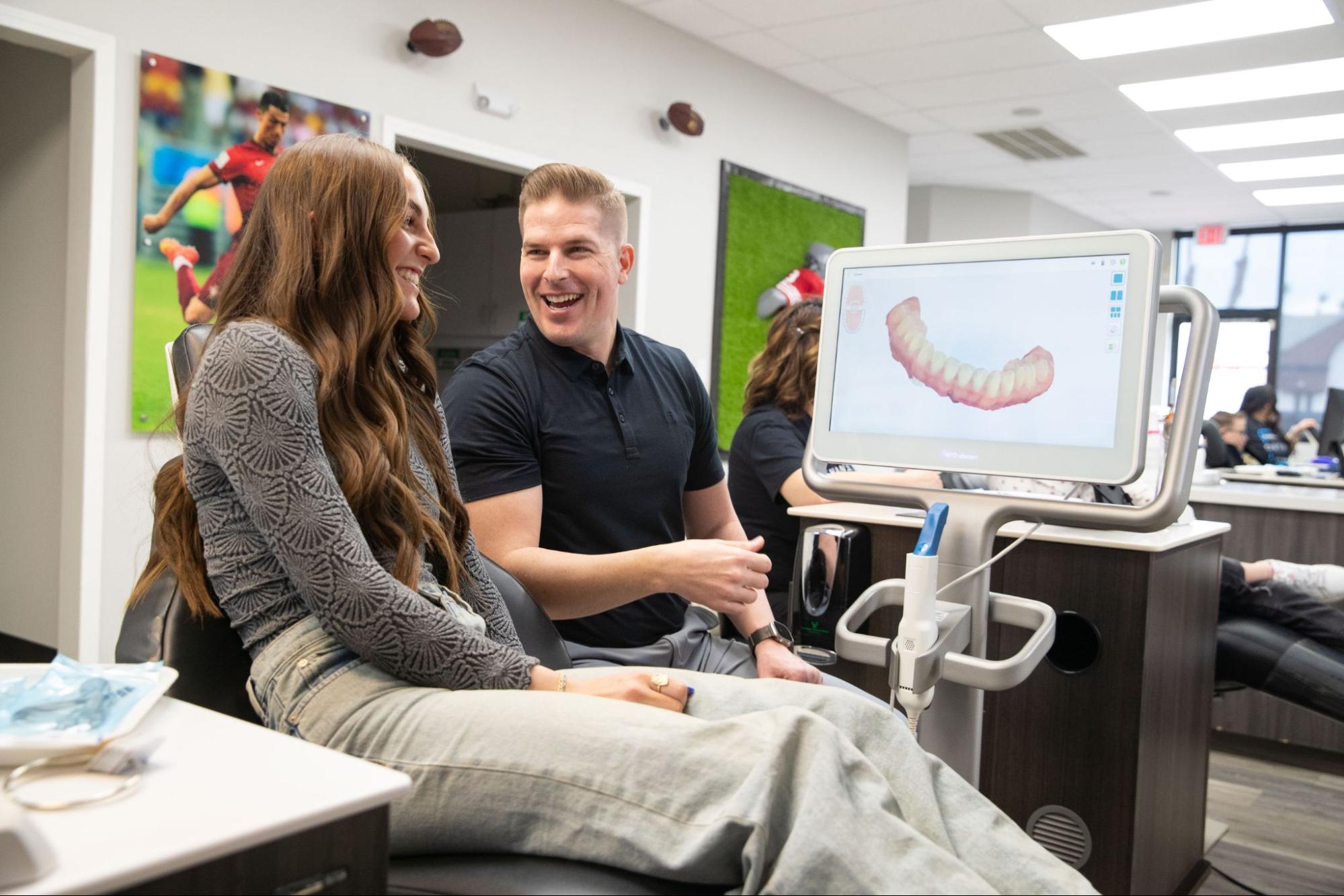
The best way to know if you’re a candidate is through a thorough evaluation. Our orthodontists use digital scans to assess your bite, jaw structure, and orthodontic needs. If you have a sleep study on file, bring those results so our team can better understand your broader care plan.
Not everyone with sleep apnea will benefit from orthodontic treatment. Severe cases may still need CPAP or other medical treatment. That’s why we work alongside medical providers when sleep apnea concerns are involved.
For families comparing treatment pages, you can also review our Braces Las Vegas, Invisalign Las Vegas, Las Vegas Orthodontist, Henderson Orthodontics, and Orthodontics for All Ages pages.
Frequently Asked Questions About Orthodontics and Sleep Apnea
Can braces cure sleep apnea?
Braces alone do not cure sleep apnea, but they can be part of a broader care plan when bite issues, jaw alignment, or oral structure contribute to airway restriction. By correcting certain bite issues and jaw alignment concerns, braces may help create better oral function and airway support. The results depend on the underlying cause and severity of the sleep apnea.
At what age should a child be screened for airway issues?
Kids should see an orthodontist by age seven for an initial evaluation. At this age, orthodontists can spot early signs of issues like mouth breathing, snoring, crowding, or a narrow palate. Early detection gives families the chance to monitor development and guide jaw growth while the child is still growing.
Does Invisalign help with sleep apnea?
Invisalign can help when bite issues contribute to poor jaw function or airway restriction. Correcting alignment problems may improve tongue position and jaw function. However, Invisalign alone is not typically a standalone treatment for sleep apnea. It works best as part of a broader plan when orthodontic alignment is one piece of the issue.
How long does airway-focused orthodontic treatment take?
Treatment length varies based on your specific needs. Palatal expansion in kids might take six to twelve months. Full orthodontic treatment addressing bite or jaw alignment could take one to two years. Your orthodontist will give you a personalized timeline during your free consult.
Will insurance cover orthodontics for sleep apnea?
Coverage depends on your plan and diagnosis. Medical insurance may cover certain treatments when they are prescribed for a diagnosed sleep disorder. Dental insurance typically covers orthodontics differently and may not recognize sleep apnea as a qualifying condition. Our team can help families understand their benefits and payment options.
Do I still need a sleep study if I see an orthodontist?
Yes, a sleep study is essential for diagnosing sleep apnea and determining its severity. Our orthodontists can evaluate your jaw structure, bite, and orthodontic needs, but only a medical provider or sleep physician can diagnose sleep apnea. We can coordinate with your sleep doctor when orthodontic care is part of the plan.
If you’re curious whether orthodontic care could help your family breathe better and sleep more soundly, learning more is always a good first step. The connection between jaw structure and healthy breathing is important, and some families may benefit from orthodontic evaluation as part of a broader care plan. Talking with both a sleep physician and an orthodontist gives you the clearest picture of your options.
Schedule a free consultation with Hansen Miller Orthodontics or start from home with a virtual consult to learn whether orthodontic care may support your family’s next step.